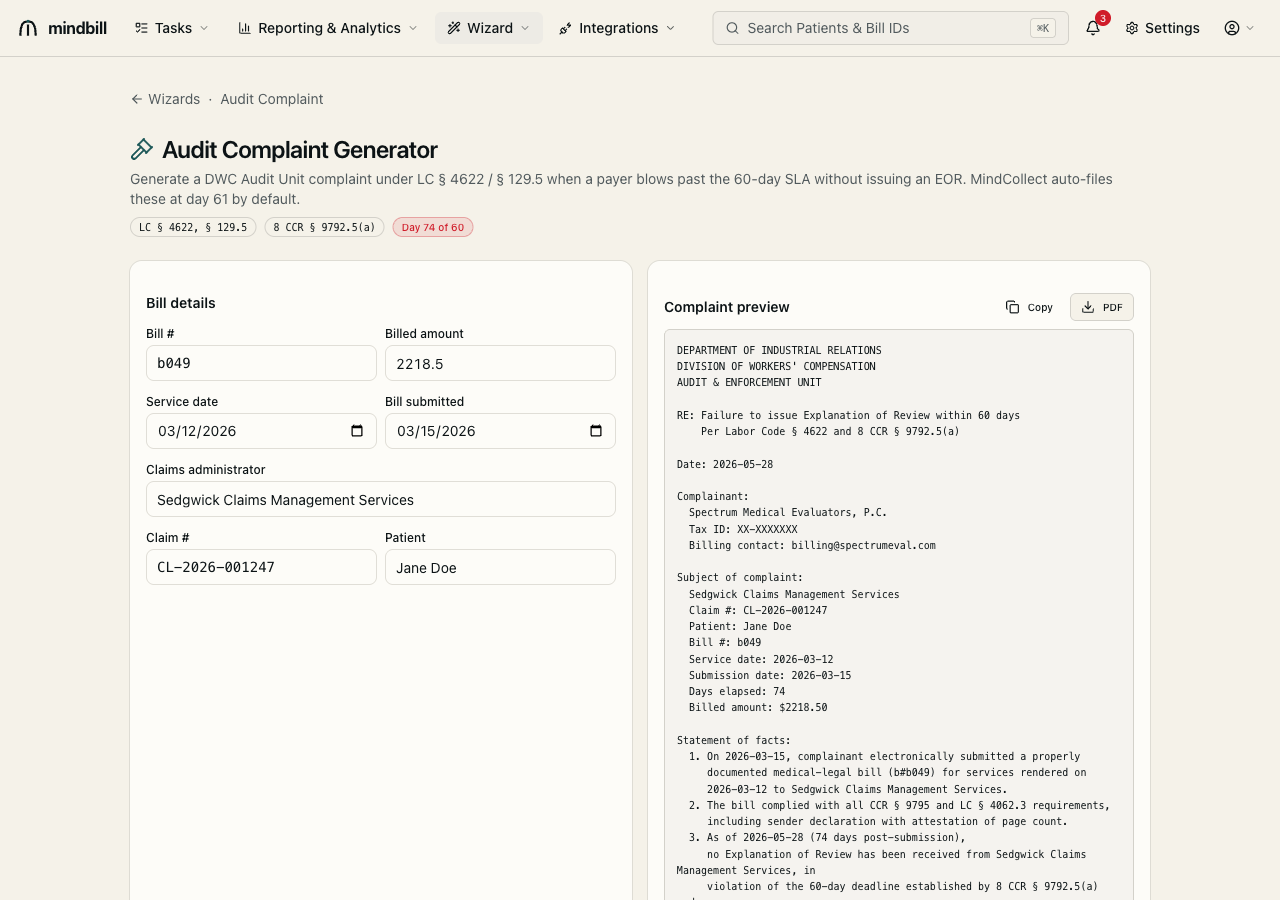
Step 1 — Watch the 60-day EOR clock
Every sent bill runs a 60-day EOR timer. When a claims administrator blows past it, the bill is flagged and the day count keeps climbing — the audit-complaint wizard shows it plainly as, e.g., Day 74 of 60. That overage is the legal basis for the complaint: 8 CCR §9792.5(a) requires the EOR within 60 days, and Labor Code §4622 and §129.5 authorize the Audit & Enforcement Unit to act when it doesn't arrive.
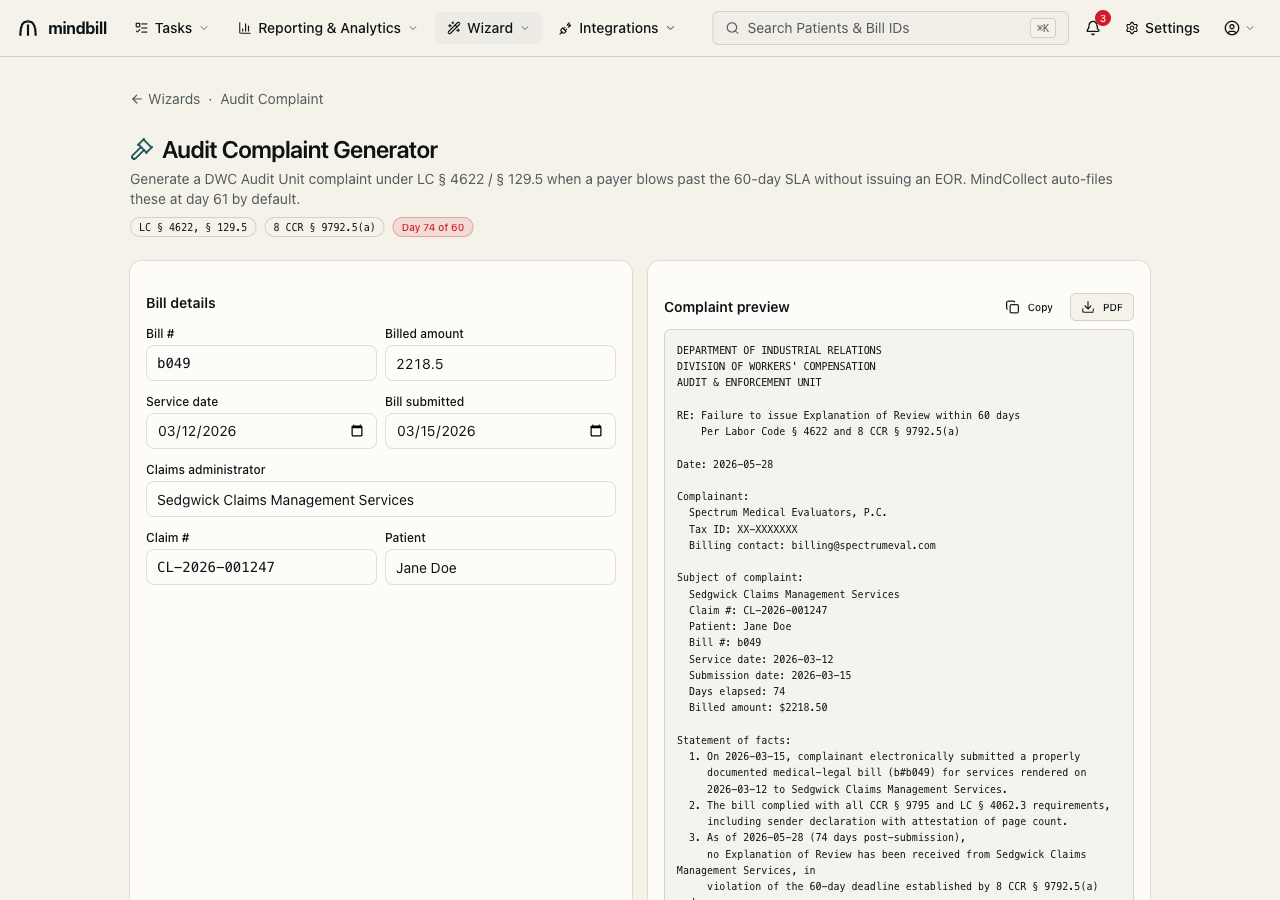
Step 2 — Generate the DWC Audit Unit complaint
Open the audit-complaint generator (/wizard/audit-complaint). It pre-fills the bill details (bill number, billed amount, service date, submission date, claims administrator, claim number, and patient) and renders the formal complaint addressed to the Department of Industrial Relations, Division of Workers' Compensation, Audit & Enforcement Unit — under the heading Failure to issue Explanation of Review within 60 days. The right-hand preview is the document you'll file.
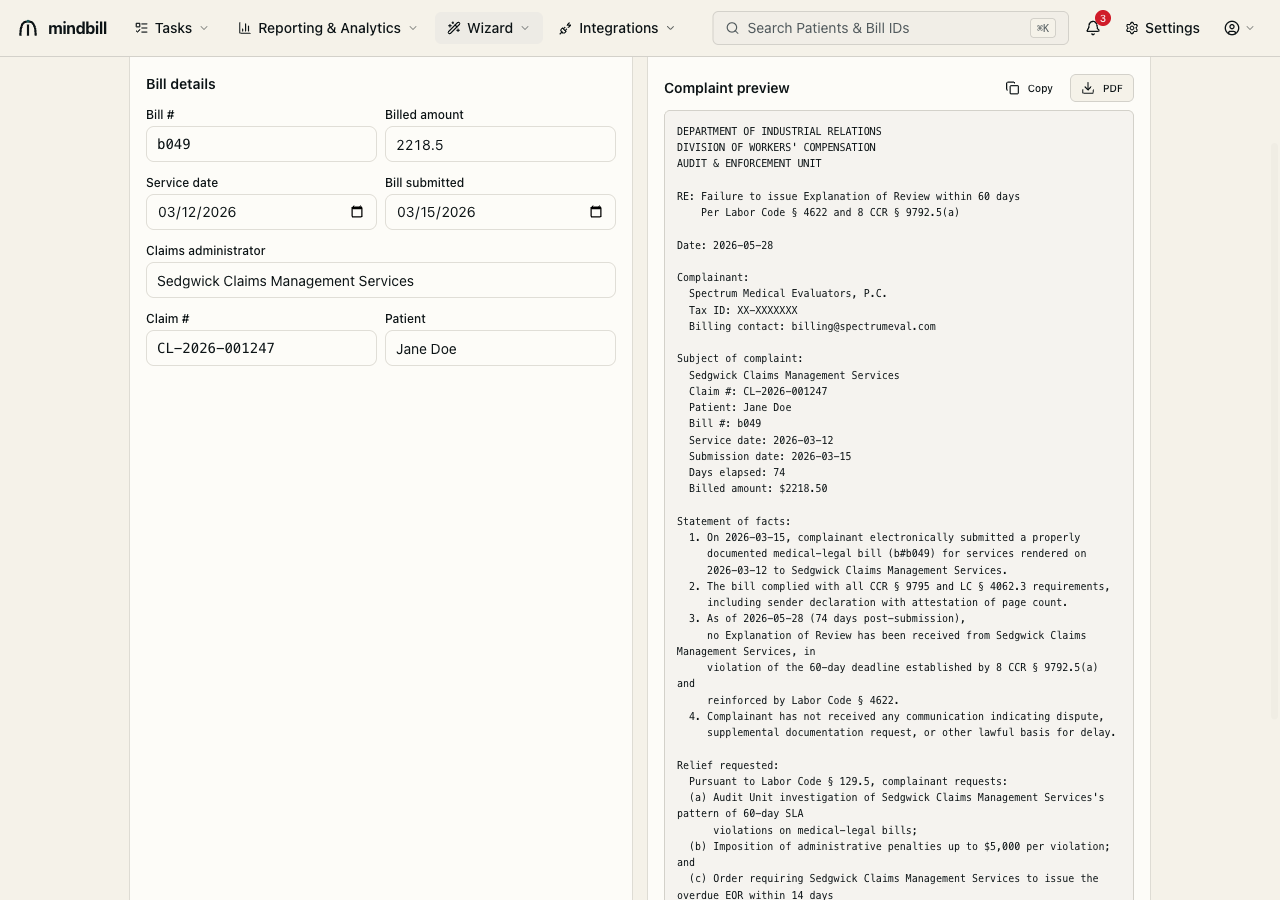
Step 3 — File it, or let MindCollect auto-file on day 61
The complaint requests relief: the overdue EOR, the payment with self-executing penalty and interest (medical-legal: 10% penalty + 7% interest after the 60-day deadline under LC §4603.2/§4622), and the Audit Unit's review of the payer's pattern (penalties up to $5,000 per violation). Export the PDF and file it, or — on the MindCollect plan — let Mindbill auto-file on day 61 with the full bill packet attached, so a non-responsive payer is escalated the moment they're late, without you watching the calendar.