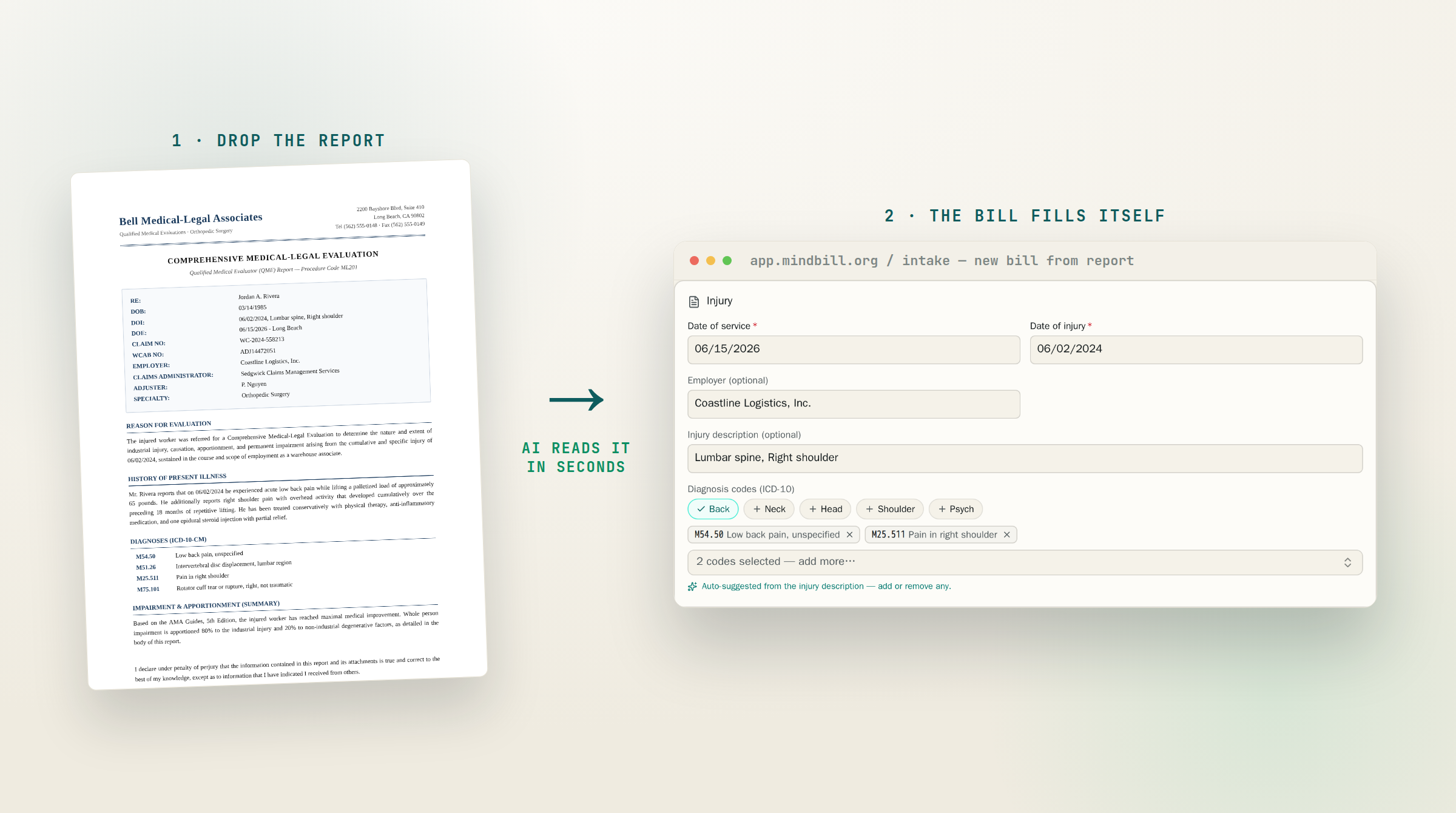
Start with the work that happens before you send the bill.
Both platforms can send workers' comp bills electronically and track the payer's response. The larger day-to-day difference is what happens first: how the final report becomes a complete bill.
With daisyBill, staff can enter the bill or bring billing details over from another system. With MindBill, staff upload the final report, let AI pull out the case and service details, then check the suggested billing codes, required modifiers, page counts, and the reason for each choice. That matters most when billers are still reading one report and typing the same facts into another system.
Measure what happens after the payer responds.
Sending the bill is only the midpoint. A useful comparison should include whether the bill was accepted, how much the payer allowed, whether the payment appears short, and how much work it takes to request a second review.
Both products support payment follow-up. MindBill reads the payer's Explanation of Review (EOR), compares the payment with the expected amount, and prepares the second-review request form (SBR-1) for staff to check. The value is not another status screen; it is reducing the manual work between noticing a short payment and acting on it.
Can it work with the software your team already uses?
daisyBill can receive bill information from other software or uploaded files. MindBill can also connect with your existing electronic health record, practice software, or internal system—and send billing updates back to the place your team already works.
Ask each vendor to demonstrate your exact workflow: where the report starts, what information moves automatically, what happens when something is missing, and where your staff will see the latest payment status.
Ask exactly how the switch will work.
The safest switch matches your providers, billing numbers, billing rules, documents, and connected software before the old workflow disappears. MindBill runs both systems side by side during setup, so your team can compare results and fix unusual cases before making the switch.
A serious switching plan should name who is responsible, test real bills, explain what happens if something goes wrong, and make clear which old records will move. Ask for that plan before choosing either platform.
Choose based on what is slowing your team down.
Your current workflow is working, your team is comfortable with it, and entering reports or connecting to other software is not slowing you down.
Your team spends time retyping reports, chasing underpayments, or keeping billing connected with other software—and wants AI to prepare the first draft for staff to check.